December 7th – Confidence builds
The last 24 hours were markedly better. One manageable storm passed in daylight — no lightning — and we were getting better at reading the squalls: reef early, aim for the tail, keep moving.
That night brought a memorable encounter with a large freighter. We radioed to clarify intentions as our courses converged. The AIS said 380 feet long, but at night in rain, a single red running light can feel enormous. Closest approach was about 1.2 miles — safe, but close enough to raise heart rates.
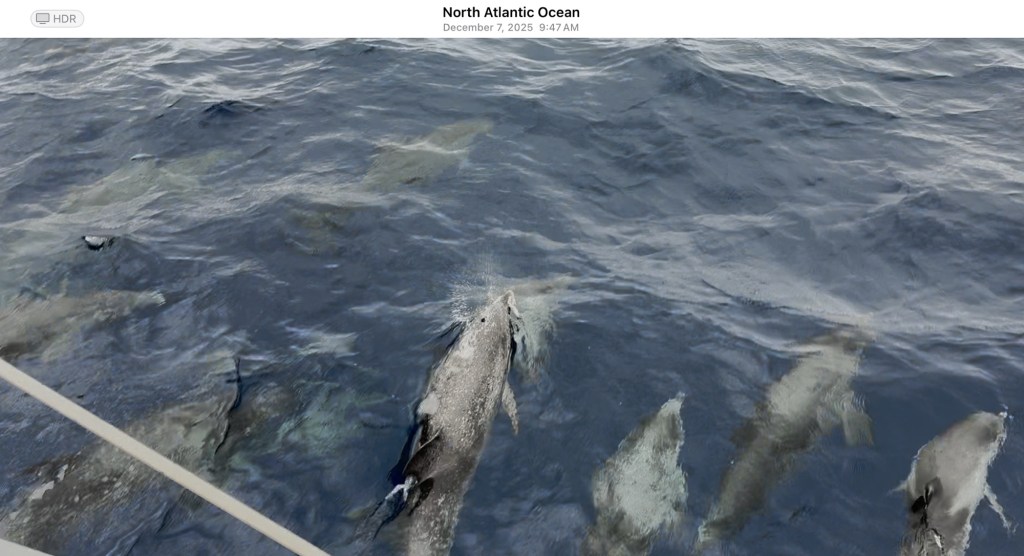
The next morning delivered a gift: dolphins — a dozen of them — joined us for over ten minutes.
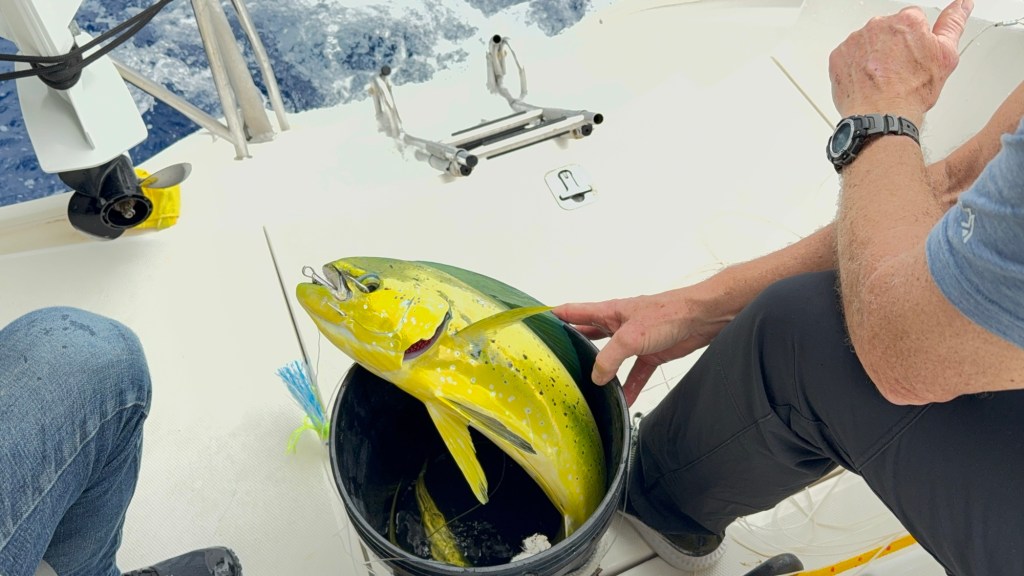
Later, mahi appeared at the end of our fishing line. Winds went light, forcing us to motor for a while, but morale lifted.
⸻
December 8 — Warmth and Showers
This was the turning point.
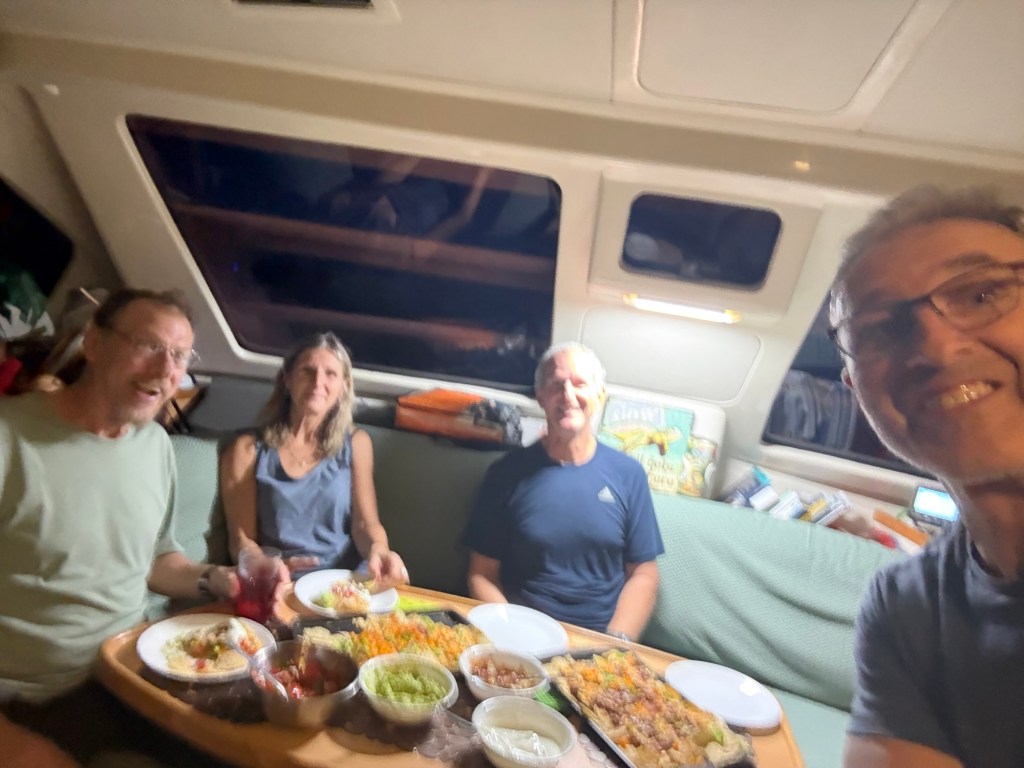
We headed straight south on a beam reach under warm sun. Seas were still large but had settled into regular, predictable swells. You could finally move around without crashing into things. Everyone managed to shower — a huge psychological boost after days of bracing and balancing.
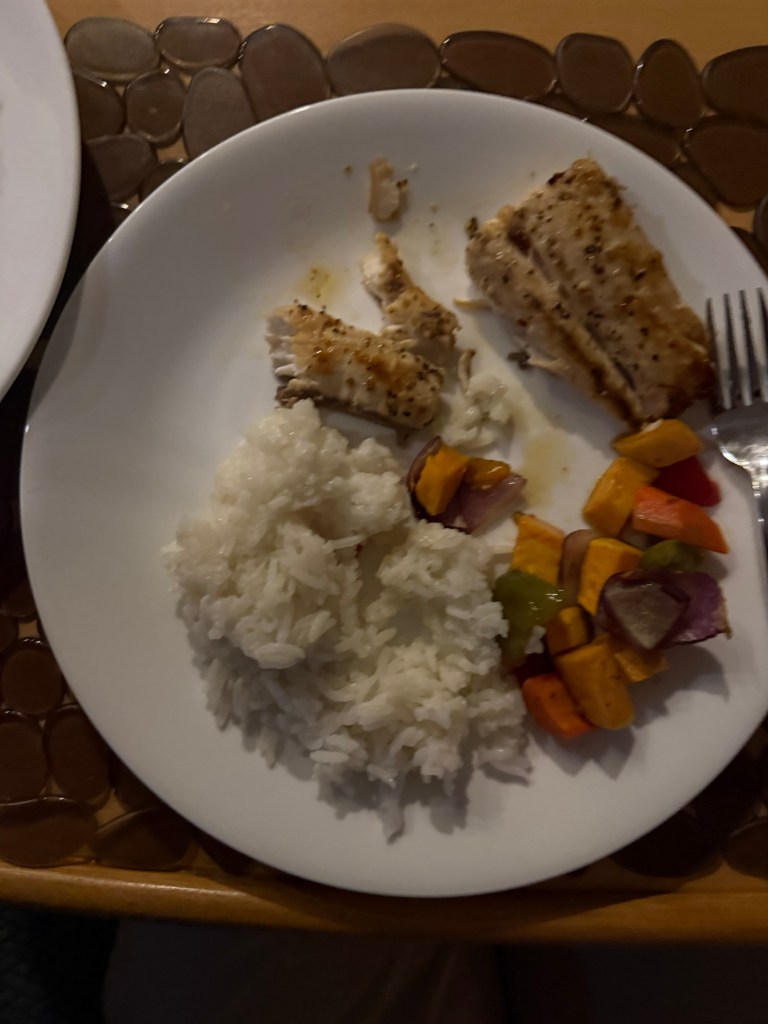
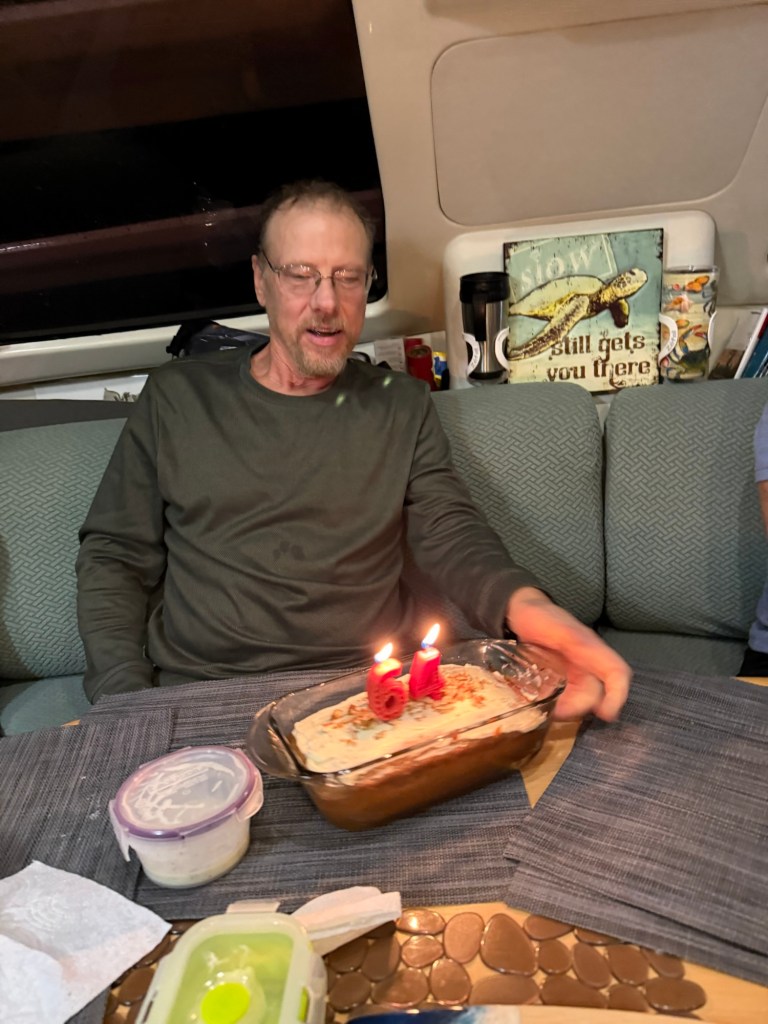
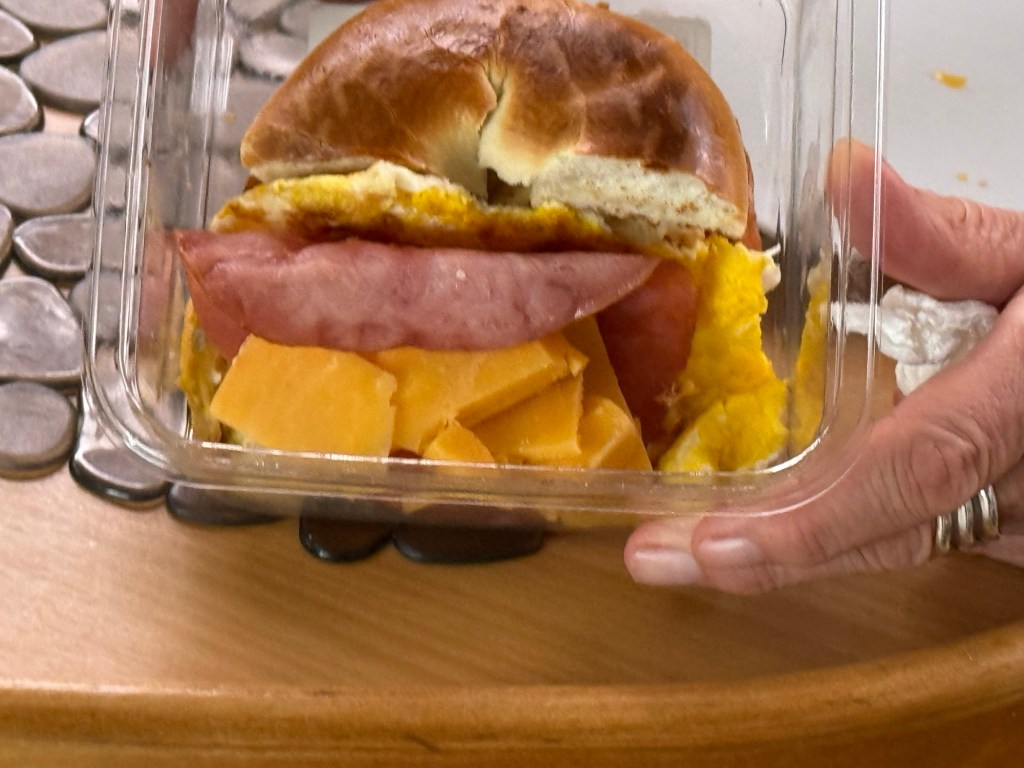
Patty continued her remarkable offshore baking streak, producing cookies, muffins, a birthday cake, and roasted vegetables — all while waves rolled beneath us.
Weather systems stayed at a distance, and confidence grew.
Only about 100 miles remained to the nearest Bahamian island. The finish line wasn’t visible, but it was finally thinkable.
⸻
December 9 — Islands Ahead
We approached the Northern Bahama islands late in the day, flying along at 6½ knots. Conditions were rocky again, and making supper an athletic event..
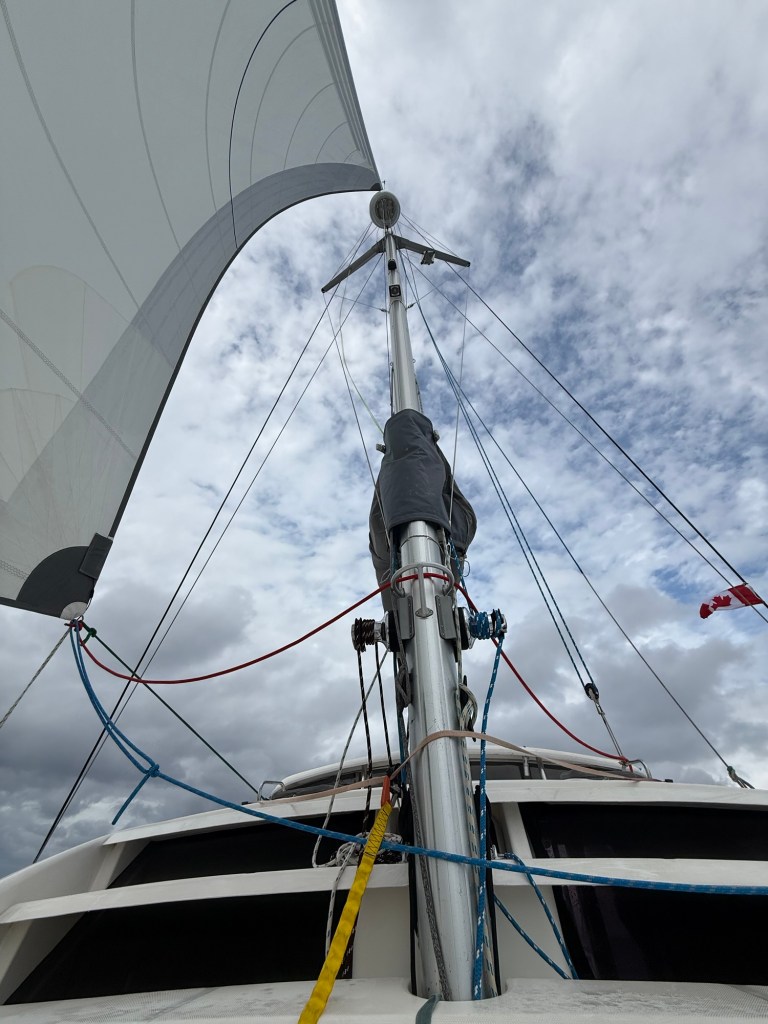
The ETA app I’d been tinkering with predicted arrival around 11:50 the next morning — remarkably accurate, as it turned out. By the way 6.5 nautical miles per hour is 12km per hour. If you can run a 10 k race in 50 minutes you are going about the same speed as we are.
That night brought focused navigation. After days of open ocean, even a 9-mile channel felt narrow. With Rod sleeping, I held the helm, threading between land masses, watching wind angle, depth, and current. Distance is hard to judge at night; everything feels closer than it is.
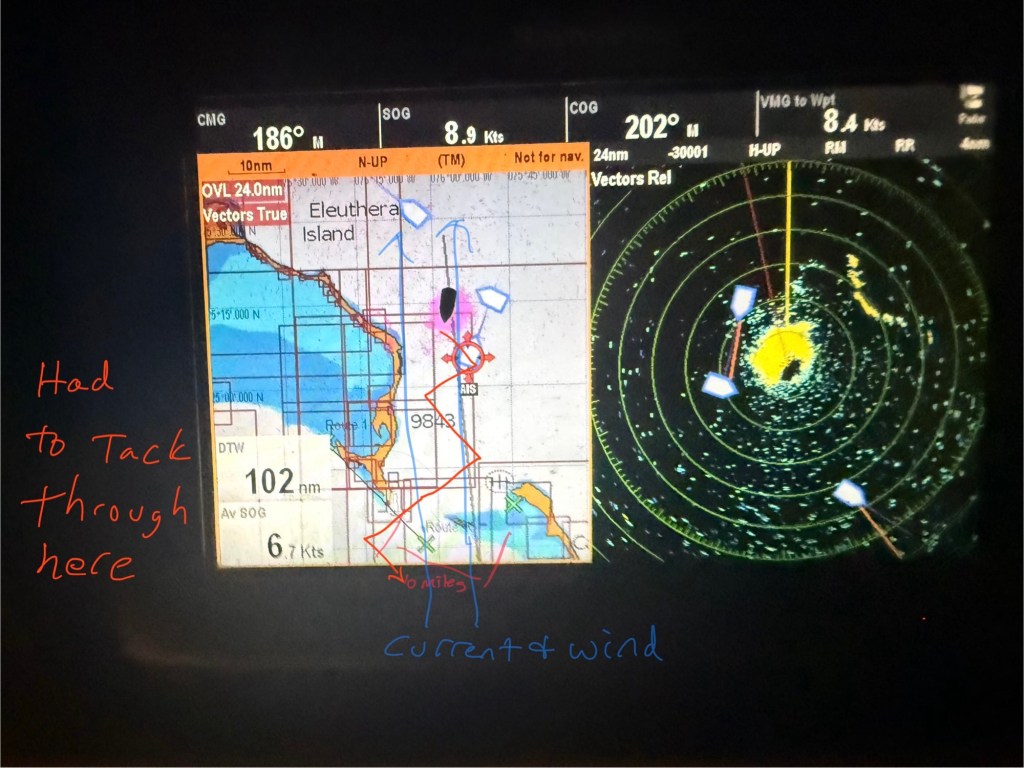
Near one island frequented by cruise ships, current overwhelmed our sail speed. We were sailing at 5 knots through the water and still being pushed backward. For a while, we were effectively trapped until tide and wind finally aligned enough to let us slip free.

 Coopers Travel Adventures